
Mapping Socio-Material Epistemic Injustice
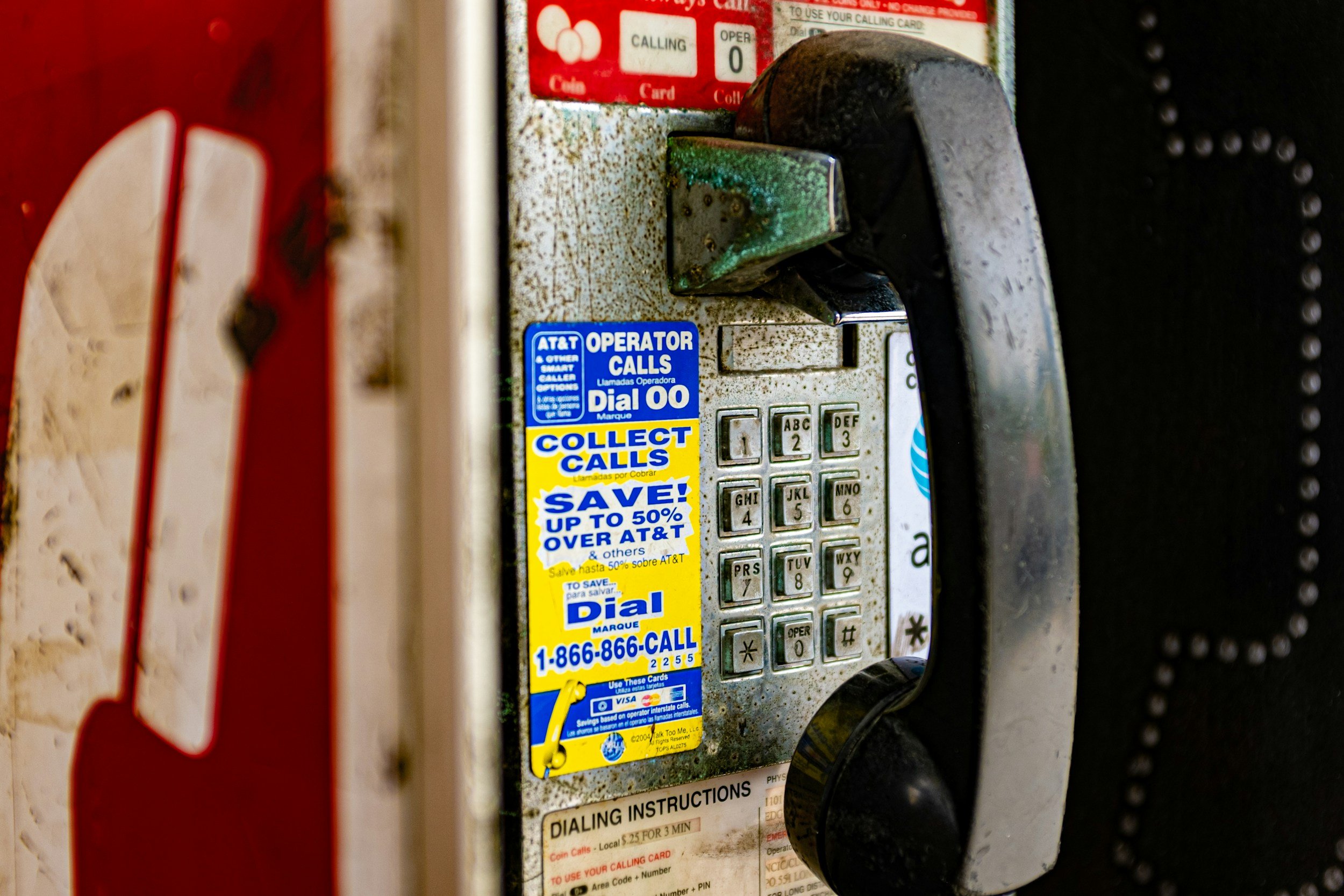
photo credit: Joshua Olsen @photowolf
I was using a pay phone after working a waitressing shift that night. I'd ridden the bus from Pacific Coast Highway in Long Beach and got off in Bellflower on Lakewood Boulevard because that's where the route ended.
The bus driver rolled to a slow stop, and pulled on the lever to open the door. I walked down the stairs not knowing where I was going to go. No other buses were in service that night.
I missed the last bus because the lead server, a student at California State University, Long Beach, wouldn't let me leave when my shift was over.
He said I had to do side work. Filling salt and pepper shakers and sugar packets in dishes wasn't enough for him.
His bushy eyebrows went down as he squinted his eyes, glaring into mine.
"Lupe said you shorted her on your payout."
“No. I paid her the 15%.”
“She said you didn’t.”
It was clear that he didn't believe me. As punishment, he ordered me to stay after the rest of the crew had left.
"I have to catch the bus."
"You can catch it after you're done."
"I can't. It stops running."
"Then you should've paid Lupe what you owed."
By then, it was already after 10 p.m. I was a minor. He didn't care. Instead he insisted that I go into the deep freezer and the walk-in refrigerator and get out all the items needed to stock the salad bar. This was about 20 items. Then, I had to wrap each deep metal serving dish in plastic and carry each one into the walk-in fridge to stock on shelves.
I started to do it. Then I slipped on the cold floor and dropped the blue cheese dressing. From my view on the floor, I watched it splatter on the floor of the walk-in refrigerator.
I was on the floor scrubbing it when he came in to check on my progress.
"What are you doing?! I told you to stock all the salad metal bins for tomorrow."
I hadn't made much in tips that night. As he shouted, I was calculating how much money I had stuffed in the wad of toilet paper inside my bra. I made sure to deduct the tips I paid the busser woman.
I shivered as I wondered, "How am I going to get out of here so I can find a safe place to sleep for the night?"
My mind was looping. The idea of sitting at an empty bus stop in the dark again scared me. I wasn’t sure what scared me most. Being alone in the dark or the bus leaving me.
No one's coming to get me. That's when I slipped.
My not having transportation or even a place to go wasn't his problem.
I didn’t care that he knew I relied on the public bus system and my feet to take me everywhere. But, I wasn’t going to tell him I didn’t have a place to go.
My dad’s words echoed: “Don’t let them see you bleed. When they see your blood, they will go in for the kill. Like animals.”
This guy drove a new car. He seemed privileged to me. His parents probably paid his college tuition.
This wasn’t my reality. I was making my own way.
I cleaned up the mess on my hands and knees. I used gobs of brown paper towels, then scrubbed it with disinfectant so the blue cheese oil wouldn't leave an oily film for someone else to slip on.
Screw him. He’s made me out to be some type of villain.
I put away the deep serving dish filled with blue cheese dressing. I don't think I refilled the last few. But I put them all in the fridge.
I chose myself. I realized I was more afraid of being stuck all night at the bus stop than I was of getting in trouble for not doing Guadalupe’s side work as my punishment. There was no streetlight near the bus stop. It was pure dark there and it didn’t even have a bench to sit on.
It was way past the time my shift ended. I had no energy left to fight for myself.
I left without saying anything. I walked, then ran, to the bus stop that night. I made that bus. But not the connecting bus.
A Night on Lakewood Boulevard
I was stuck on Lakewood Boulevard. I'd just hung up the pay phone. I had made calls around looking for a place to go. That's when they drove up to me in a black and white police car. Two Los Angeles Sheriffs rolled down their windows.
"Hey, who were you calling?" they shouted out.
"My ride."
"That's not what it looks like. You're calling on a payphone late at night."
They snickered. I didn't laugh. I just looked at them. It wasn't funny.
"What are you really doing out here this time of night?"
"I just got off work."
"Doing what? Waiting for a customer?"
"No. I'm a waitress. Look at me. This is a white button-down top. And I'm wearing black pants and shoes."
They laughed harder and kept talking at me. I can't remember what else they said to me. Maybe I blocked it out.
I ended up spending all my tips on a taxi to Downey, where I slept outside under a patio table at my mom's oldest brother's house while he was on vacation.
What Testimonial Injustice Explains, and Where It Stops
This is a fraction of my experience as a speaker within the theoretical framework Miranda Fricker created and named testimonial injustice. While the name testimonial injustice implies a partial meaning of the theory, it's not as simple as its name.
Testimony refers to a speaker giving their own account of their own experience. When a listener lessens the speaker’s credibility based on their own prejudicial judgment, an injustice is committed. This is testimonial injustice.
The injustice lies in the biases and judgments of the listener. In these examples and in theory, the speaker is sharing her own truth.
Fricker's Framework
Fricker argues that in situations where the listener rejects or does not believe the speaker, such as those mentioned here, the listener is filtering the speaker through their own prejudices. The listener unfairly diminishes the speaker's credibility.
Let's apply this to my first example. I became the speaker when I was accused, as a minor, by a lead server (an adult) of not giving a busser (an adult) her share of the tips I earned.
Where My Framework Extends
I argue it's more than that.
The damage went further than knowing I wasn't believed. I was punished. This caused me undue distress. I was made to do part of the busser's work as well as my own.
I was harmed socially, psychologically, physically, financially, and institutionally. I became someone the listener sneered at, someone he believed was less worthy of respect.
When I stated my limit, that I couldn't stay past my shift, that limit was pushed aside. He insisted that I stay to complete the punishment he assigned me.
This caused me undue distress. I slipped while having worry thoughts rooted in my fear about transportation, about the public bus leaving me behind. Because I wasn't believed, I missed the connecting bus, which was then out of service.
This led me to spend all of my tips on a taxi, since it was late at night and I didn't feel safe walking miles alone in the cold and dark. It also brought me into contact with the Los Angeles County Sheriff’s, who caused more harm.
Fricker assumes the best in listeners. She calls it ignorance. I don't. I assess and examine intent.
Introducing Socio-Material Epistemic Injustice
While Fricker's framework positions testimonial injustice primarily as an intrinsic insult to a speaker's capacity as a knower, this paper introduces the concept of Socio-Material Epistemic Injustice. I argue that testimonial injustice is never merely an impersonal epistemic transaction.
It is a deeply personal and material event that prompts a cascade of multi-dimensional harms. By tracking what happens after credibility of testimony is denied, this framework maps how epistemic exclusion compounds into psychological trauma, physical and somatic suffering, financial deprivation, social isolation, and institutional harm.
Assuming no malice from the listener is not realistic. In moral philosophy, intent is assessed, especially given human nature's capacity for cruelty. To show what that cascade of harm actually looks like, I return to the second example: the encounter with the Los Angeles County Sheriff's deputies on Lakewood Boulevard.
Applying the Framework: The Sheriff Encounter
When the deputies drove up to me on Lakewood Boulevard, they used their sight, cultural assumptions, training, and their own personal filters to take in the following facts.
I was a young woman, alone, using a pay phone at around midnight on a busy four-lane boulevard. I was dressed in a white oxford button-down shirt, black slacks, and black shoes. Shivering in the cold without a coat, I silently prayed I'd find somewhere safe to sleep fast. My eyes burned with the feeling of sand stuck in them, my dried-out contacts like suction cups.
Then the deputies rolled up in their black and white patrol car.
Oh, great. What do they want? Am I going to get in trouble for breaking some kind of curfew law? Please just let me get out of here fast.
They questioned who I was calling. With their raucous laughter, I felt the tightness in my shoulder first, like a hand clenching it. Then the shooting pain down my left arm. And they wouldn't stop. Somehow I became their source of entertainment. They made everything worse.
Would I make it out of this? I just wanted to get to a safe place to sleep. I was so tired. My feet were on fire from waiting tables all night.
Cascade of Harms
The deputies pulled up and, before I spoke, they already had a set of facts to work with: my gender, youth, clothes, location, and the time.
We entered the first stage of Social Material Injustice when their perception became the reason for not believing my testimony. This first stage of perception set the stage for everything that came after it.
Prejudicial Interpretation
Before I said a word, the deputies were already using their own schema to judge what they saw. They chose to cling to a social logic that judges certain identities as less credible than others.
They'd deemed me one of the working poor. After all, in Southern California, people my age with financial means typically drove their own or a family member's car. But there I was, 17 and stranded on the side of a busy highway in the dark of the night.
They read my clothes, my age, and my location through assumptions about gender, class, and who belongs in public space after dark. In their assumptions, my identity as a working poor made me less deserving. That judgment happened before I ever opened my mouth to respond to their questions.
The deputies had already decided who I was before I spoke. That decision shaped how they heard and interpreted what I said next.
Credibility Denial
I gave them my testimony. I was a waitress who had just gotten off work. I was using the pay phone to look for transportation to get somewhere safe to sleep for the night. This was true. It was easy to understand.
Rather than accepting my testimony as truth, their unsaid accusation hung in the air. It was replaced by whatever story they decided fit better with what they had already decided about me.
Once they dismissed my testimony, they did not move along to police the streets. They stayed and treated me as someone with something to hide, laughing at my situation while questioning my intentions.
Suspicion
Once my testimony was dismissed, the deputies moved from disbelief into skepticism. They questioned who I was calling. The question was not asked to help me find a ride. It was asked to catch me in something.
My explanation, a stranded waitress (and minor) looking for transportation, was no longer treated as information. It was treated as a story that needed to be verified. Then they found it flawed. This is the moment testimonial injustice became something more than a personal failure. It becomes an investigation into my legitimacy.
The deputies had the power to act on that suspicion. They turned a frightening situation for a homeless working teen into a show, something to laugh at for their own entertainment.
Institutional Treatment
The deputies had the authority of the badge and the patrol car behind them. That authority did not lead them to help me. It led them to laugh.
Their laughter turned my situation into entertainment. I was not a stranded teenager to them. I was a source of amusement, something to pass the time with before they moved on to whatever came next. The institution meant to protect me became something that made things worse for me.
Their questions and their laughter, with callous commentary, registered in me right away. These were people I could not trust or turn to for safety. They had become the danger, not the protection against it.
Embodied Fear
My body responded before my mind could make sense of what was happening. The tightness came first, gripping my shoulder like a hand had closed around it. Then the pain shot down my left arm. This was not a metaphor. This was fear, physical and immediate, registering danger I had not yet named.
That physical fear pointed to something real. The situation had changed, and any possible sense of safety was removed.
Loss of Safety
I had been searching for one thing: somewhere safe to sleep. Instead, the people who were supposed to bring safety became the source of threat. Things got twisted instantaneously. I no longer knew if I would make it out of this encounter unharmed. Safety was not just delayed. It became uncertain.
With my safety uncertain, my options narrowed to one: wait it out. They had weapons and a car. I had no way to run.
Narrowed Possibility for Action
I could not ask them for help. I could not push back against their laughter or their questions. My only option was to wait for them to lose interest and leave. I was exhausted, my feet burning from a full night of waiting tables. My one goal became all I could see in front of me.
Pressured to act fast, I spent the remainder of the tips I earned that night to take a taxi to a safe place to rest for the night.
What This Demonstrates
This demonstrates the central claim of Socio-Material Epistemic Injustice: that testimonial injustice does not end at the point of disbelief. It changes how a speaker is seen, and that becomes the condition for subsequent material and institutional vulnerability and harm.