What is Neurodiversity?
Three Ways to Understand It
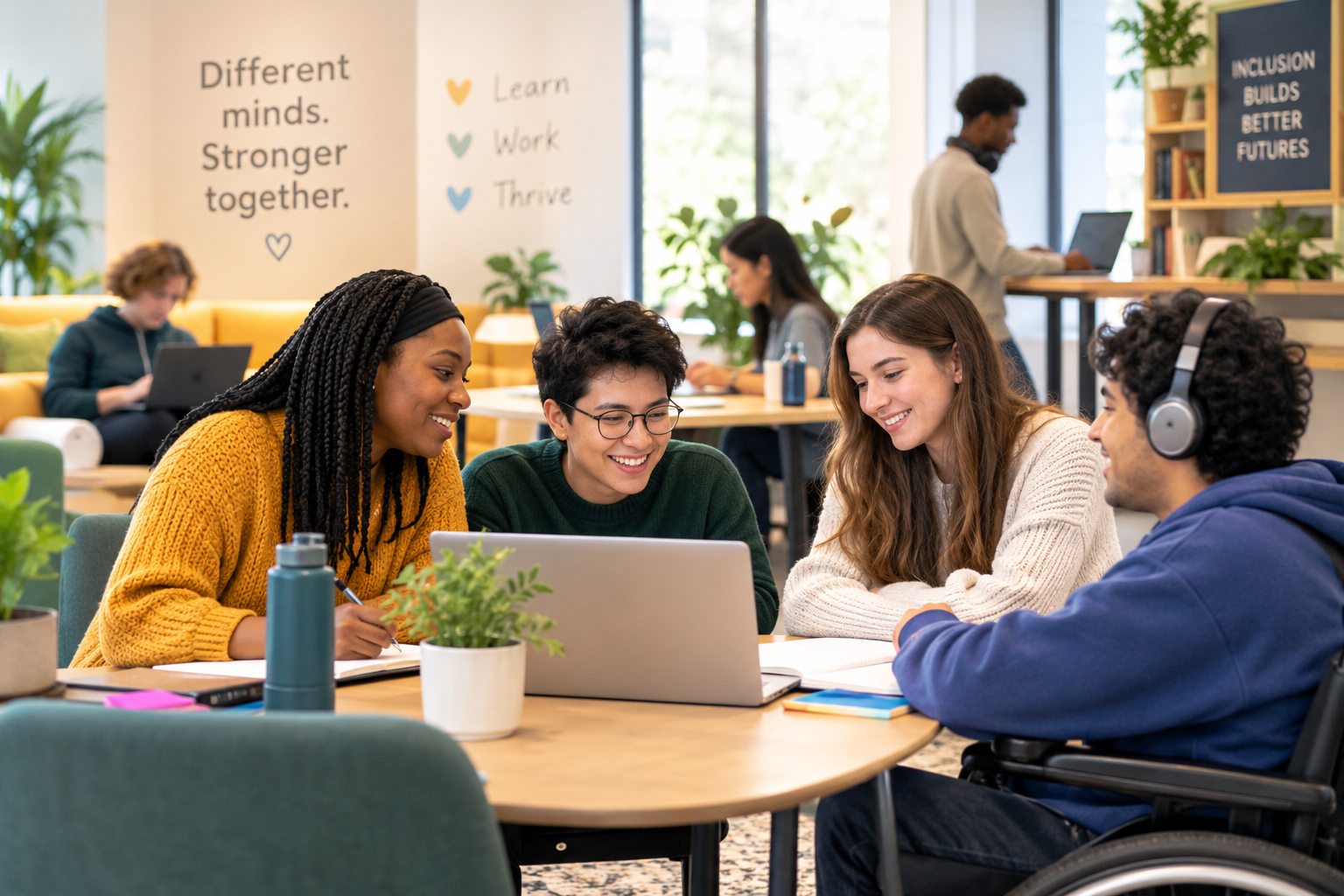
A variety of minds working together. Image prompted by author using AI.
What is Neurodiversity?
Neurodiversity is actually close in meaning to its name. Neuro means brain and diversity means variety. Put them together and get brain diversity or a variety of brains. Neurodiversity means differences in human brains. Not all brains function in the same way.
Neurotypical describes a person whose brain works in the way society expects. Neurodivergent describes a person whose brain works differently from the expectation placed by society. Neurodiversity explains what our brains are like altogether.
In this article, I will share three ways of viewing neurodiversity.
Three Different Ways of Viewing Neurodiversity
Medical View
The word neurodiversity was first used to describe specific neurological differences and attributes connected with Autism. Many articles credit Judy Singer with first using the term neurodiversity in her thesis titled “Odd People In: The Birth of Community Amongst People on the Autistic Spectrum” at the University of Technology Sydney in 1998. Singer is an Australian sociologist with Autism.
However, a group of Autistic scholars state that the term was created collectively amongst the Autistic community including self-advocates.
Since then, the neurodiversity movement has broadened the term neurodiversity to include ADHD, dyslexia, dyspraxia, learning disabilities, and Tourette’s Syndrome as part of neurodiversity. Within medicine, the term neurodiversity is seen in contrast to a neurotypical brain. It’s viewed as a deficit or something to be fixed.
An example of the medical view is a speech therapist who asked my son when she first met him during an intake assessment, if she needed to worry about him becoming violent or throwing things. My son felt sad that someone would assume that he would harm someone because he is on the Autism Spectrum.
This speech therapist used the medical model to make assumptions about my son based on his diagnosis as someone on the Autism Spectrum. He showed up for a speech therapy intake hoping to get support for social communication. Instead, he was met with someone’s unfair assumptions and presumptions.
Seaside nature, photo by Dr. Amy Gunter
Similar to Biodiversity View
Harvey Blume brought neurodiversity to the public in an article he wrote for The Atlantic. In his article, " Neurodiversity: On the Neurological Underpinnings of Geekdom” he argued that diversity in brains should be viewed like biodiversity.
Blume was making a point that the public’s view of Autism, Asperger’s Syndrome, and other variances in the human brain were viewed using the deficit model. The deficit model means that it was viewed as a weakness. Instead, Blume advocates that diversity in brains can also be viewed like biodiversity. In biodiversity, variety is viewed as a strength. For example, in nature, we benefit from a variety of plants. They all contribute in certain ways.
Meaning no brain is inherently right or wrong, but diversity is just another way of being. Blume goes on to state that we need people with neurodiversity. He uses examples of how technological innovation and the economy benefit from the strengths of neurodivergent brains.
An example of using the view of neurodiversity as similar to biodiversity would be a therapist exploring, identifying, or asking a person with neurodiversity about their strengths. Then, supporting the individual in exploring how they can use these strengths.
A Social and Cultural Construct
Many neurodiversity advocates, including Autism self-advocates, note that viewing Autism and other types of neurodiversity in comparison or contrast to typical brains contributes to ableism.
Another definition of neurodiversity is given by the neurodiversity movement. Swedish researchers Stenning and Rosqvist suggest that neurodivergence itself is a social and cultural construct. This means that it is made up by humans. They suggest that human brains should not be compared to what is considered a neurotypical or “normal” brain. In doing so, Stenning and Rosqvist argue that the comparison feeds into “othering”.
“Othering” is a way of looking down on an individual or a group. It’s a way of viewing a member or the group itself as not being worthy. By considering people with neurodiversity as others, they are instantly considered outsiders. Assigning humans as outsiders creates cognitive distance. When humans put cognitive distance between themselves and certain others, they become numb to the feelings, value, and needs of people they see as others.

Yellow blooms, photo by author, Dr. Amy Gunter
Social Model View
Another model used to explore neurodiversity is the social model. The social model says that a person is disabled by the barriers placed before them, not by their brain. According to Dwyer, many advocates of the social model reject the medical model. A scan for barriers is recommended. Advocates of the social model and those who abide by it naturally look for barriers that get in the way. These barriers block access and add stressors for people with neurodiversity. This makes access to and inclusion in educational, vocational, social, and recreational environments and opportunities more difficult.
An example of the social model view is a teacher that reviews a student’s accommodations and makes the needed adjustments. For example, if a student needs information chunked or broken into smaller parts the teacher does this. This could mean breaking a history project into mini-lessons. One of the first lessons might be teaching students how to write a thesis statement in the introductory paragraph and allowing students processing time and support to do this. Another example might be checking in with the student to ask if there is another way they need the information presented. Instead of viewing this as a chore, the teacher sees this as part of teaching.
In contrast, the medical model says there is something inherently wrong with the neurodiverse brain. This type of thinking can contribute to harmful segregation, discrimination, and ostracization of people with Autism, ADHD, dyslexia, dyspraxia, learning disabilities, and Tourette’s Syndrome. In many contexts, these harms are internalized, thus damaging one’s belief in their own infinite worth. This brings much pain to individuals and the neurodiversity community.
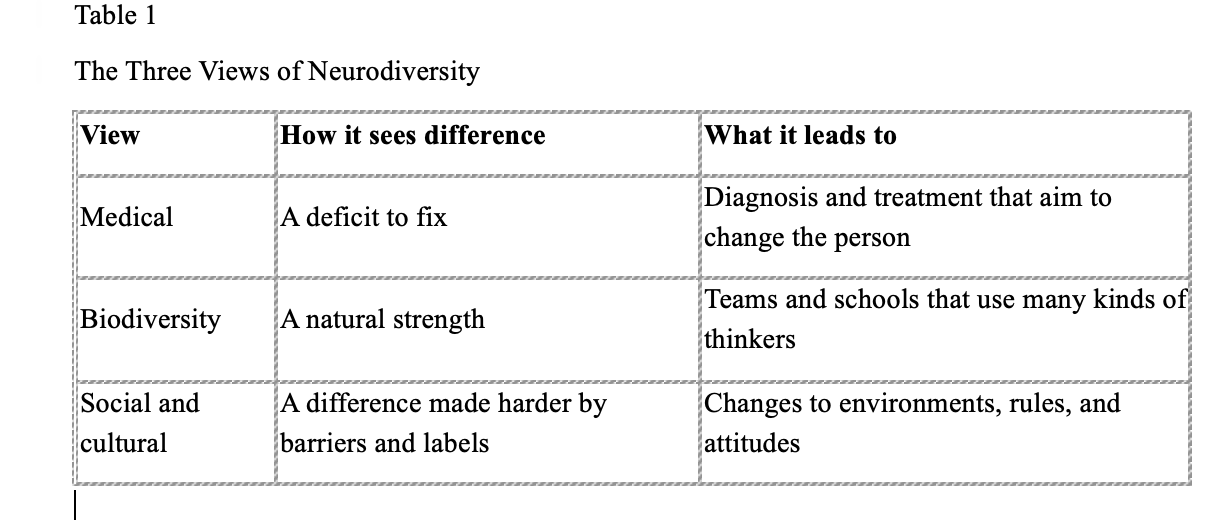
Table 1 created by author, Dr. Amy Gunter
A nuance here is that a diagnosis can still open doors to services and supports, even when the view behind it is a deficit view. Many people hold more than one view at once.
Why Words Matter
The way we view ourselves and others matters. The view a person holds can be highly linked to what they do. A teacher with a medical view may focus on what a student cannot do. A teacher with a social view asks what is in the way, such as noise, timing, or only one way to show learning.
An employer who sees neurodiversity as a strength may build a team with many types of thinkers. Language shapes how people see themselves. Words like disorder, deficit, and normal hang in the air like acid. Words like these erode one’s sense of dignity and self-worth. Words like variety and range protect it.
In my work, I use neurodiversity to mean the natural range of human brains. I lean on the social model because it points to what we can change, which are the barriers. I also keep a place for diagnosis, because it opens doors to support for many people.*
*A diagnosis is required in some places, such as schools, colleges and universities, state developmental disability agencies (called regional centers in California), and healthcare systems, to get accommodations or services.

Observe the Owl image created by Dr. Amy Gunter
I train school and agency teams to find and remove barriers for neurodivergent students, clients, and staff. See my workshops and training or start with a free 15-minute call
I also advocate for individuals and families who are working through disability, mental health, and school systems. Individuals and families can reach out here.
Amy Gunter, Ed.D., MSW is the the founder of Gunter Consulting. She provides training, consultation, and advocacy to help schools, agencies, and families remove barriers for neurodivergent people.
References
Blume, H. (1998). Neurodiversity: On the neurological underpinnings of geekdom. The Atlantic.
Botha, M., Chapman, R., Giwa Onaiwu, M., Kapp, S. K., Stannard Ashley, A., & Walker, N. (2024). The neurodiversity concept was developed collectively: An overdue correction on the origins of neurodiversity theory. Autism, 28(6), 1591–1594. https://doi.org/10.1177/13623613241237871
Dwyer, P. (2022). The neurodiversity approach(es): What are they and what do they mean for researchers? Human Development, 66(2), 73–92. https://doi.org/10.1159/000523723
Singer, J. (1998). Odd people in: The birth of community amongst people on the autistic spectrum [Honours thesis, University of Technology Sydney].
Stenning, A., & Rosqvist, H. B. (2021). Neurodiversity studies: Mapping out possibilities of a new critical paradigm. Disability & Society, 36(9), 1532–1537. https://doi.org/10.1080/09687599.2021.1919503